
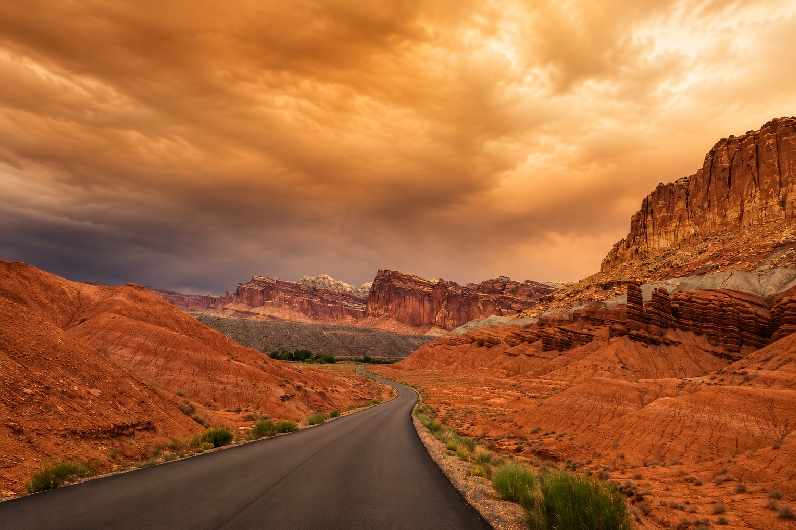
When planning a road trip through the American Southwest, most travelers immediately think of Zion National Park, Bryce Canyon, or the Grand Canyon. But there’s one national park that absolutely deserves a spot on your itinerary—and it’s still one of Utah’s best-kept secrets: Capitol Reef National Park.
I wasn’t quite sure what to expect before visiting. Like many travelers, I’d mostly heard about its famous homemade pies and historic orchards. I figured it would be a quick stop between Bryce Canyon and Kanab… but Capitol Reef ended up being one of the biggest surprises of my Utah road trip.
What I loved most about Capitol Reef was how different it felt from the other major national parks in the Southwest. The atmosphere is much quieter and more relaxed. Instead of rushing from one viewpoint to the next, you can slow down, enjoy the scenery, take short walks to incredible overlooks, or watch mule deer grazing peacefully in the Fruita orchards. Here, you’re not spending your day searching for parking or waiting in line for a shuttle bus.
Capitol Reef offers a unique combination of breathtaking landscapes, fascinating history, and beautiful desert scenery. In just a few hours, you can explore towering red sandstone cliffs that are millions of years old, discover ancient Fremont petroglyphs, wander through the lush Fruita Historic District, drive one of Utah’s most scenic roads, and enjoy several easy hikes suitable for most visitors.
And of course, no visit to Capitol Reef would be complete without stopping at Gifford Homestead. Before my trip, everyone told me I had to try their famous homemade pies. Honestly, I thought they might be a little overrated… but after trying the apple pie, peach pie, and cinnamon rolls, I completely understand why this little bakery has become a must-visit stop inside the park!
In this guide, I’ll share my one-day itinerary, the park’s must-see attractions, the best things to do, practical travel tips, and several things I wish I’d known before visiting. If you’re still wondering whether Capitol Reef deserves a place on your Utah road trip, I hope this guide will convince you that it’s well worth the stop.
Why Visit Capitol Reef National Park?
Often referred to as Utah’s “hidden gem,” Capitol Reef National Park is frequently overlooked in favor of more famous parks like Zion and Bryce Canyon. But after visiting, I can honestly say it deserves just as much attention. In fact, one of its biggest strengths is that it offers a much more peaceful and authentic national park experience.
Unlike Zion or Bryce Canyon, where you may need to reserve certain activities months in advance or wait in long lines for shuttle buses, Capitol Reef lets you enjoy incredible scenery at a much more relaxed pace. Even during peak season, it’s usually easy to find parking, explore the park, and take your time without feeling surrounded by crowds.
At the heart of the park is the Waterpocket Fold, a spectacular 100-mile-long (160 km) wrinkle in the Earth’s crust that formed millions of years ago. This remarkable geological feature created the dramatic landscape Capitol Reef is famous for today, with towering red sandstone cliffs, deep canyons, colorful rock domes, and rugged monoliths that seem to change color throughout the day as the light shifts.
But Capitol Reef is much more than stunning scenery. It’s also rich in history. Long before Mormon settlers arrived, the Fremont people lived in this area, leaving behind fascinating petroglyphs that can still be seen today. One of the best things about these ancient rock carvings is how easy they are to access—they’re located just off the park’s main road, making them a must-see stop for every visitor.
Another highlight of Capitol Reef is the Fruita Historic District. Thanks to the Fremont River, this lush oasis sits in the middle of the desert and is home to historic orchards planted by early settlers more than a century ago. Depending on the season, visitors can even pick fresh cherries, apricots, peaches, pears, or apples straight from the orchards—an experience that’s surprisingly rare in a U.S. national park.
Capitol Reef is also an excellent destination for families. Many of the park’s top attractions require little or no hiking, making them easy to enjoy with children. If you’re looking for a bit more adventure, trails like Hickman Bridge and Cassidy Arch offer unforgettable views, while those who prefer sightseeing by car will love the scenic drive through the heart of the park.
In short, if you’re looking for breathtaking scenery, fewer crowds, fascinating history, and unique experiences like fruit picking or enjoying a slice of homemade pie at Gifford Homestead, Capitol Reef National Park absolutely deserves a place on your Utah road trip. It ended up being one of my favorite stops in Utah, and it’s a park I would recommend without hesitation.
Where to Stay Near Capitol Reef National Park
Capitol Reef National Park at a Glance
Planning a visit? Here’s everything you need to know before you go.
| Information | Details |
|---|---|
| 📍 Location | Utah |
| ⏱️ Recommended Visit Time | 1 full day (2 days if you enjoy hiking) |
| 🚗 Drive from Bryce Canyon National Park | About 2 hours 30 minutes |
| 🚗 Drive from Zion National Park | About 2 hours 15 minutes |
| 🚗 Drive from Moab | About 2 hours 30 minutes |
| 🎟️ Entrance Fee | Included with the America the Beautiful Pass or a Capitol Reef National Park entrance pass |
| 🥾 Hiking Difficulty | Easy to moderate, depending on the trail |
| 👨👩👧👦 Family-Friendly | Yes |
| 🐶 Pets | Allowed only in limited areas (not on most trails) |
| 🌸 Best Time to Visit | Spring and Fall |
Capitol Reef National Park is one of Utah’s Mighty Five national parks and is often considered one of the state’s best hidden gems. With fewer crowds than Zion or Bryce Canyon, it’s the perfect stop on any Utah road trip.
Where Is Capitol Reef National Park?
Located in the heart of south-central Utah, Capitol Reef National Park is one of Utah’s famous Mighty Five national parks. Yet despite its incredible scenery, it’s often the least visited and least talked-about of the five.
The park sits along Utah Scenic Byway 24, making it a perfect stop on a road trip between Bryce Canyon National Park, Moab, and Zion National Park. Whether you’re exploring Utah’s national parks or planning a longer Southwest road trip, Capitol Reef is an easy and worthwhile addition to your itinerary.
I visited Capitol Reef after spending time at Bryce Canyon before continuing my road trip to Kanab and Zion National Park. In my opinion, it’s the perfect route because each destination offers completely different landscapes, making every day of the trip feel unique.
One of the first things that surprised me when I arrived was the dramatic contrast between the park’s towering red sandstone cliffs and the lush green Fruita Historic District. Fed by the Fremont River, this peaceful oasis is home to thousands of fruit trees, creating a beautiful splash of green in the middle of Utah’s rugged desert landscape.
How Much Time Do You Need to Visit Capitol Reef National Park?
This was probably the question I asked myself the most while planning my trip.
After visiting the park, I can confidently say that one full day is the perfect amount of time to see Capitol Reef’s main highlights without feeling rushed.
In just one day, you’ll have plenty of time to:
- Explore the ancient Fremont Petroglyphs
- Drive the scenic Capitol Reef Scenic Drive
- Visit the beautiful Fruita Historic District
- Try the famous homemade pies and cinnamon rolls at Gifford Homestead
- Spot mule deer wandering through the historic orchards
- Hike one or two popular trails, such as Hickman Bridge or Grand Wash
- Explore the stunning Capitol Gorge
However, if you’re an avid hiker or want to explore more remote areas of the park—such as Cathedral Valley or the scenic Burr Trail Road—I’d recommend spending at least two days in Capitol Reef.
For most travelers on a Utah road trip, though, one well-planned day is enough to experience the very best that Capitol Reef National Park has to offer.
My Tip: Don’t Make the Mistake of Just Driving Through Capitol Reef
While planning my trip, I came across plenty of road trip itineraries that suggested simply driving through Capitol Reef on the way to Moab or Bryce Canyon.
Honestly, I think that’s a mistake.
Yes, the drive is beautiful—but it only gives you a small glimpse of what this incredible national park has to offer.
Some of Capitol Reef’s best experiences take very little extra time. A short walk to the Fremont Petroglyphs, a stop in the Fruita Historic District, a slice of homemade pie at Gifford Homestead, a stroll through Capitol Gorge, or an easy hike to Hickman Bridge can completely change your experience of the park.
These are the moments that make Capitol Reef so different from Utah’s other national parks.
If your schedule allows, I highly recommend spending a full day here. I truly don’t think you’ll regret it.
My One-Day Capitol Reef National Park Itinerary
If you only have one day to explore Capitol Reef, here’s the itinerary I recommend. It follows a logical route through the park, minimizes backtracking, and lets you experience the park’s highlights at a relaxed pace.
I also recommend starting your day as early as possible, especially if you want to stop at Gifford Homestead. Their famous homemade pies and cinnamon rolls are incredibly popular, and the best flavors often sell out by early afternoon during the busy season.
Here’s the order I recommend:
- Fremont Petroglyphs
- Fruita Historic District
- Gifford Homestead
- Fruita Orchards
- Spot mule deer in the orchards
- Capitol Reef Scenic Drive
- Capitol Gorge
- Hickman Bridge Trail (late afternoon)
Following this itinerary will allow you to experience the best of Capitol Reef National Park in a single day while avoiding unnecessary driving and making the most of your time.
1. Visit the Fremont Petroglyphs
If there’s one stop I recommend making as soon as you arrive at Capitol Reef National Park, it’s the Fremont Petroglyphs. They’re one of the park’s easiest attractions to visit, yet many travelers drive right past them without stopping.
These ancient rock carvings were created by the Fremont people between 700 and 1,300 years ago. They depict human figures, animals, and mysterious symbols whose meanings are still unknown today.
The petroglyphs are conveniently located just off Utah Highway 24, and reaching them couldn’t be easier. A short wooden boardwalk and a few stairs lead to the viewing area in just a couple of minutes.
Even though the walk is very short, take your time. The longer you look at the rock walls, the more carvings you’ll begin to notice. It’s fascinating to imagine the people who created these incredible works of art centuries ago.
Time needed: 15–20 minutes
💡 My tip: Visit early in the morning. The lighting is much better for seeing and photographing the petroglyphs, and you’ll usually avoid the crowds.
2. Explore the Fruita Historic District
After visiting the petroglyphs, head to the Fruita Historic District, the heart of Capitol Reef National Park.
This was probably the place that surprised me the most.
One moment you’re surrounded by dramatic red rock cliffs and desert landscapes, and the next you’re standing in a peaceful oasis filled with towering cottonwood trees, green lawns, and historic orchards. It’s hard to believe you’re still in the middle of the Utah desert.
Founded by Mormon pioneers in the late 1800s, Fruita was once a small farming community. Today, many of its historic buildings have been carefully preserved by the National Park Service, giving visitors a glimpse into what life was like for the early settlers.
My advice is simple: slow down and enjoy the atmosphere.
Take a short walk, admire the towering sandstone cliffs surrounding the valley, and appreciate the peaceful setting that makes Capitol Reef so different from Utah’s busier national parks.
Fruita is also one of the best places in the park to spot mule deer. Early morning and late afternoon are usually the best times, and it’s not uncommon to see them grazing quietly among the orchards.
Time needed: 30–45 minutes
3. Don’t Miss Gifford Homestead

No visit to Capitol Reef National Park is complete without stopping at Gifford Homestead.
Before my trip, I kept hearing people rave about the park’s famous homemade pies. To be honest, I thought they might be a little overrated…
I was wrong.
I tried the apple pie, peach pie, and one of the famous cinnamon rolls, and every single one was delicious.
The pies are baked fresh daily, and the flavors change throughout the year depending on what’s in season. If you’re visiting during the summer or early fall, you may even get to taste pies made with fruit picked from the historic Fruita orchards.
In addition to the bakery, Gifford Homestead also sells homemade jams, local honey, handcrafted gifts, and souvenirs, making it a fun place to browse even if you’re not hungry.
💡 My tip: Try to visit earlier in the day. The most popular pies and cinnamon rolls often sell out by early afternoon, especially during the busy summer season.
For me, Gifford Homestead wasn’t just a bakery—it became one of the highlights of my visit to Capitol Reef National Park.
🚗 Find the Best Rental Car Deals
4. Stroll Through the Historic Fruita Orchards
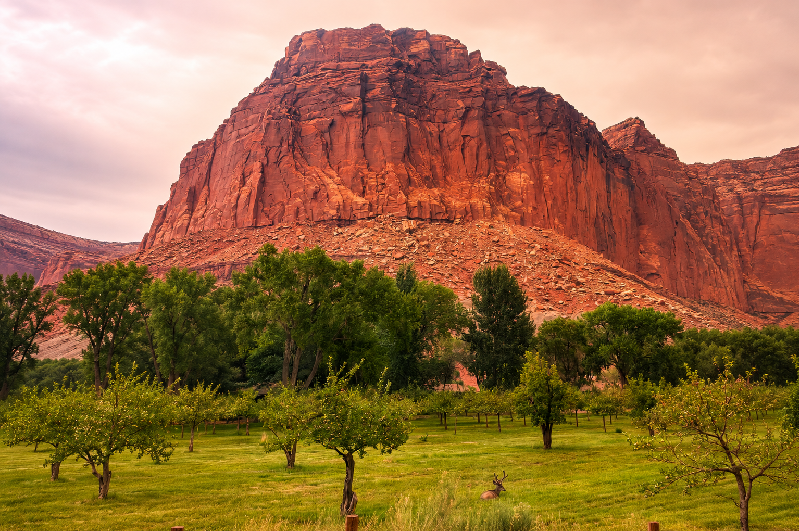
Just a short walk from Gifford Homestead, you’ll find the famous Fruita Orchards, one of the most unique features of Capitol Reef National Park.
This was easily one of my favorite places in the park.
Maintained by the National Park Service, these historic orchards were originally planted by Mormon pioneers in the late 1800s. Today, more than 2,700 fruit trees still grow here, preserving Fruita’s rich agricultural history while offering visitors a truly unique experience.
Depending on the time of year, you may even have the opportunity to pick your own fruit. During harvest season, visitors can purchase freshly picked fruit directly from the orchards—a tradition that’s incredibly rare in a U.S. national park.
Here’s a general idea of what you can expect throughout the year:
- 🍒 Cherries: Late June to early July
- 🍑 Apricots: July
- 🍑 Peaches: August
- 🍐 Pears: Late August
- 🍎 Apples: September through October
Even if you’re visiting outside the harvest season, I still highly recommend taking a walk through the orchards. The contrast between the lush green trees, the towering red cliffs, and the surrounding desert landscape is absolutely stunning.
It’s also one of the best places in Capitol Reef to slow down, enjoy the peaceful atmosphere, and appreciate how different this park feels compared to Utah’s more crowded national parks.
Time needed: 20–30 minutes.
💡 My tip: If you’re visiting during harvest season, check the National Park Service signs at the entrance to each orchard. They’ll let you know which fruits are available for picking and the current price per pound.
5. Keep an Eye Out for Mule Deer
One of the biggest surprises during my visit to Capitol Reef National Park was seeing so many mule deer roaming freely throughout the park.
The Fruita Historic District is one of the best places to spot them. Thanks to the lush orchards, grassy meadows, and the Fremont River, mule deer are a common sight here, especially during the cooler parts of the day.
During my visit, I saw several of them peacefully grazing in the orchards. They seemed completely at ease around visitors while remaining wild animals in their natural habitat.
If you enjoy wildlife photography, keep your camera within easy reach. Early morning and late afternoon are usually the best times to spot mule deer, and the soft golden light makes for beautiful photos.
While it can be tempting to get closer, remember to keep a safe distance at all times. Never feed or approach wildlife, even if the animals appear calm or accustomed to people.
For me, watching these beautiful animals against Capitol Reef’s towering red cliffs was one of the most unforgettable moments of my visit.
🏨 Book a Hotel Near Capitol Reef
6. Drive the Capitol Reef Scenic Drive
After exploring Fruita, it’s time to experience one of the park’s biggest highlights: the Capitol Reef Scenic Drive.
This beautiful paved road is one of the best ways to discover Capitol Reef’s incredible landscapes without spending hours hiking.
Stretching 8 miles (13 km) one way, the Scenic Drive winds through towering red sandstone cliffs, colorful rock formations, and dramatic desert scenery, with plenty of pullouts where you can stop and take in the views.
Unlike some of the more crowded scenic drives in the Southwest, I found this one incredibly peaceful. Traffic was light, parking was easy, and I never felt rushed. It was the perfect opportunity to slow down, enjoy the scenery, and stop whenever something caught my eye.
One thing I loved was how the landscape constantly changed along the drive. Depending on the light, the sandstone cliffs shifted from deep red to orange and even soft golden tones. If you’re into photography, plan for extra time—you’ll probably find yourself stopping much more often than you expected.
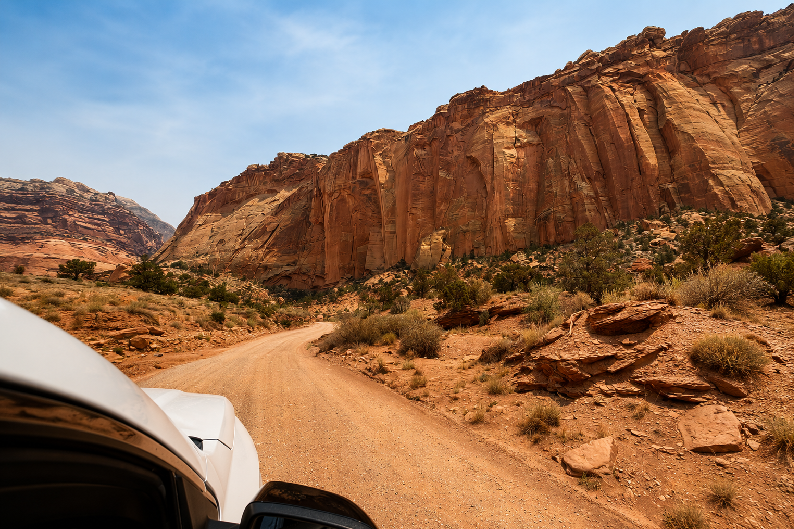
The Scenic Drive is suitable for most passenger vehicles. However, several unpaved roads branch off from it, including routes to more remote areas of the park. Some of these require a high-clearance vehicle or even a four-wheel-drive vehicle, depending on current road conditions.
Time needed: About 1 hour, including photo stops.
💡 My tip: Drive the Scenic Drive either early in the morning or later in the afternoon. The softer light brings out the incredible colors of the cliffs, and you’ll avoid the hottest part of the day during the summer.
7. Continue to Capitol Gorge
At the end of the Capitol Reef Scenic Drive, the paved road gives way to Capitol Gorge Road, leading you into one of the park’s most impressive canyons.
This was one of my favorite stops in Capitol Reef.
Before Utah Highway 24 was built, Capitol Gorge served as the main route for early settlers traveling through the area. As you walk through the narrow canyon, it’s easy to picture horse-drawn wagons making their way between the towering sandstone walls more than a century ago.
The trail itself is mostly flat, making it an easy walk for families and visitors of all ages.
What I loved most was the feeling of being surrounded by massive red cliffs that seem to close in around you. Despite being one of the park’s most popular attractions, the canyon still feels peaceful and quiet.
Depending on how much time you have, you can simply walk a short distance into the canyon or continue farther to enjoy even more of its spectacular scenery.
Time needed: 30–45 minutes.
Don’t Miss the Pioneer Register
One of the highlights of Capitol Gorge is the Pioneer Register, a fascinating piece of Capitol Reef’s history.
As you walk through the canyon, you’ll see names carved into the sandstone by early settlers who passed through the area during the late 1800s and early 1900s. Many of these inscriptions have survived for well over a century and offer a unique glimpse into the region’s pioneer history.
Standing in front of these historic signatures, I couldn’t help but imagine what life must have been like for the people who traveled through this rugged landscape long before modern roads existed.
Today, the Pioneer Register is protected by the National Park Service. Visitors should never touch the carvings or add their own names, helping preserve this remarkable historic site for future generations.
💡 My tip: Take your time as you walk through Capitol Gorge. It’s easy to focus on the towering cliffs, but don’t forget to look around—you’ll discover incredible rock formations, beautiful textures in the sandstone, and one of the most unique historic landmarks in any U.S. national park.
8. Hike to Hickman Bridge
If I had to recommend just one easy hike in Capitol Reef National Park, it would definitely be Hickman Bridge Trail.
It’s one of the park’s most popular hikes—and after doing it myself, it’s easy to understand why.
The trail gradually climbs through Capitol Reef’s beautiful red rock landscape before reaching Hickman Bridge, a massive natural bridge standing nearly 133 feet (40 meters) tall.
One thing I loved about this hike is that the scenery is spectacular from start to finish. You’re constantly surrounded by towering cliffs, colorful rock formations, and incredible desert views, so the hike is just as rewarding as the destination itself.
Although the first part of the trail is a steady uphill climb, I never found it particularly difficult. If you take your time and wear comfortable hiking shoes, it’s a very manageable hike for most visitors.
When you finally reach Hickman Bridge, don’t rush off. Take a few minutes to stand beneath this impressive natural arch and really appreciate its size. Photos simply don’t do it justice.
Trail Information
- Round-trip distance: 1.8 miles (2.9 km)
- Hiking time: 1 to 1.5 hours
- Difficulty: Easy to moderate
- Elevation gain: About 400 feet (120 m)
💡 My tip: If you’re visiting during the summer, try to hike in the late afternoon or early evening when temperatures are cooler. Be sure to bring plenty of water, as there’s very little shade along the trail.
Have More Time? Here Are a Few More Great Hikes
If you’re spending an extra day in Capitol Reef—or simply want to explore beyond the park’s main attractions—there are several other fantastic trails worth adding to your itinerary.
Cassidy Arch Trail
If you’re looking for a more challenging hike, Cassidy Arch is one of Capitol Reef’s most iconic trails.
The hike is steeper and more strenuous than Hickman Bridge, but the reward is incredible. You’ll reach the top of a massive natural arch with breathtaking panoramic views over the surrounding canyon.
The trail is named after the famous outlaw Butch Cassidy, who is believed to have used this area as a hideout.
- Round-trip distance: 3.4 miles (5.5 km)
- Hiking time: 3 to 4 hours
- Difficulty: Moderate to strenuous
If you’re comfortable with longer hikes, this is one of the best in the park.
Grand Wash Trail
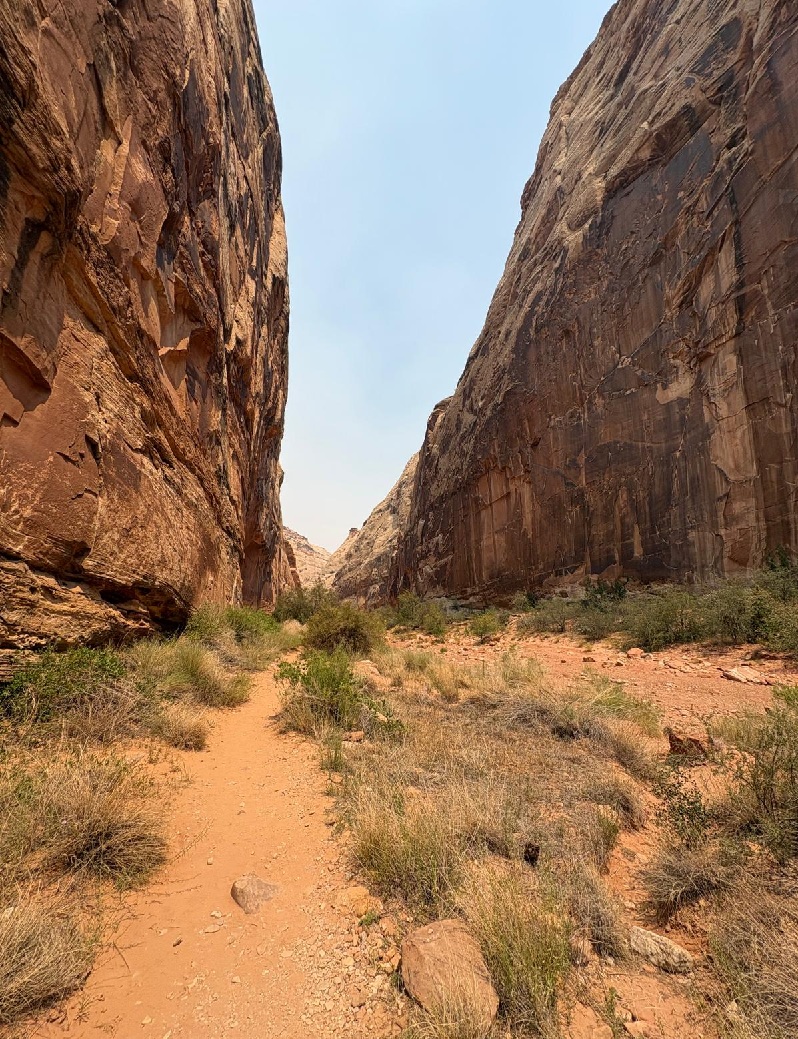
Another hike I highly recommend is Grand Wash.
Unlike Hickman Bridge, this trail takes you through a wide desert wash surrounded by towering sandstone cliffs that rise hundreds of feet overhead.
It’s one of the best places in Capitol Reef to experience the park’s dramatic canyon scenery up close, and because there’s very little elevation gain, it’s much easier than it looks.
If you only have time for one additional hike beyond Hickman Bridge, Grand Wash is an excellent choice.
- Round-trip distance: Up to 4.4 miles (7.1 km), depending on where you start
- Hiking time: 2 to 3 hours
- Difficulty: Easy
💡 My tip: Avoid hiking Grand Wash if there’s any risk of rain. Like many slot canyons in the Southwest, it can be dangerous during flash floods, even if it’s not raining directly over the trail.
Cohab Canyon Trail
If you’re looking for a quieter hike, Cohab Canyon Trail is a great alternative.
Less crowded than Hickman Bridge, this scenic trail offers beautiful panoramic views overlooking the Fruita Historic District and the surrounding red rock cliffs. Along the way, you’ll hike through a colorful canyon before reaching several impressive overlooks.
Because it’s often overlooked by visitors, Cohab Canyon is a great option if you’re hoping to enjoy a more peaceful hike away from the busiest areas of the park.
My Thoughts on Hiking in Capitol Reef
Although many people think of Capitol Reef as a park that’s best explored by car, I honestly believe you’d be missing out if you didn’t hit at least one trail.
The great thing about Capitol Reef is that you don’t have to spend hours hiking to experience its beauty. Even a relatively short hike like Hickman Bridge gives you a completely different perspective of the park and lets you experience its incredible landscapes up close.
That’s one of the things I loved most about Capitol Reef—there’s something for every type of traveler.
Whether you prefer taking in breathtaking views from the comfort of your car, enjoying a short walk through historic orchards, or tackling a longer hike like Cassidy Arch, you’ll find plenty of ways to experience the park at your own pace.
For me, that’s what makes Capitol Reef so special. It offers the perfect balance between scenic drives, easy walks, and rewarding hikes, making it one of the most enjoyable national parks to explore in Utah.
My Thoughts on Hiking in Capitol Reef
Although many people think of Capitol Reef as a park that’s best explored by car, I honestly believe you’d be missing out if you didn’t hit at least one trail.
The great thing about Capitol Reef is that you don’t have to spend hours hiking to experience its beauty. Even a relatively short hike like Hickman Bridge gives you a completely different perspective of the park and lets you experience its incredible landscapes up close.
That’s one of the things I loved most about Capitol Reef—there’s something for every type of traveler.
Whether you prefer taking in breathtaking views from the comfort of your car, enjoying a short walk through historic orchards, or tackling a longer hike like Cassidy Arch, you’ll find plenty of ways to experience the park at your own pace.
For me, that’s what makes Capitol Reef so special. It offers the perfect balance between scenic drives, easy walks, and rewarding hikes, making it one of the most enjoyable national parks to explore in Utah.
Where to Eat Near Capitol Reef National Park
Unlike some of the larger national parks in the United States, dining options in and around Capitol Reef National Park are fairly limited, so it’s a good idea to plan your meals.
If you’re looking for a quick snack or a sweet treat, Gifford Homestead is a must-visit. In addition to its famous homemade pies, you’ll also find freshly baked cinnamon rolls, seasonal ice cream, drinks, and a selection of light snacks.
However, it’s important to note that Gifford Homestead is not a full-service restaurant.
My tip: Pack a picnic lunch and take advantage of the many picnic tables located throughout the Fruita Historic District. Enjoying lunch surrounded by towering red cliffs and historic orchards is a much better experience than leaving the park in the middle of the day to find a restaurant.
If you’re looking for a more substantial meal, head to the charming town of Torrey, located about 15 minutes west of Capitol Reef National Park. Although it’s a small town, you’ll find several excellent restaurants serving classic American cuisine.
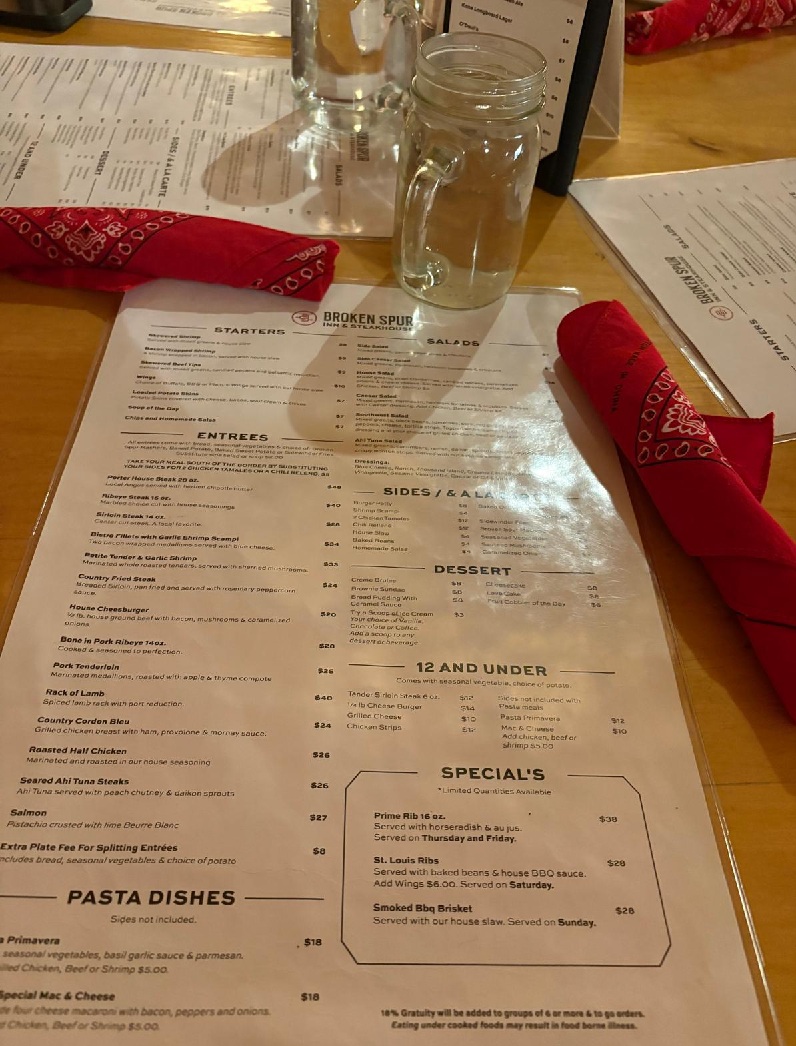
During my stay, I had dinner at Broken Spur Steakhouse, one of the most popular restaurants near Capitol Reef. Known for its steaks, burgers, and hearty Western-style dishes, it’s a favorite among locals and visitors alike. I really enjoyed the cozy atmosphere, the generous portions, and the friendly service.
If you’re spending the night in Torrey, I definitely recommend adding Broken Spur Steakhouse to your itinerary. It’s the perfect place to relax and enjoy a great meal after a full day of exploring Capitol Reef National Park.
Where to Stay Near Capitol Reef National Park
If you want to explore Capitol Reef at a relaxed pace, I highly recommend staying in Torrey, Utah.
This charming small town is the main gateway to Capitol Reef National Park and offers a great selection of hotels, motels, vacation rentals, bed and breakfasts, and campgrounds.
During my Utah road trip, I stayed in Torrey and found it to be the perfect base for visiting the park. Being just a short drive from the west entrance allowed me to get an early start, avoid the hottest part of the day, and make the most of my time in Capitol Reef.
If you’re continuing your road trip to Moab, Bryce Canyon National Park, or other destinations in southern Utah, Torrey is also a convenient and scenic place to spend the night.
When Is the Best Time to Visit Capitol Reef National Park?
The good news is that Capitol Reef National Park is open year-round, and every season offers something different.
That said, some times of the year are definitely better than others, depending on what you’re looking for.
Spring (March to May)
In my opinion, spring is one of the best times to visit Capitol Reef.
Temperatures are mild, wildflowers begin to bloom, and the orchards in the Fruita Historic District start coming back to life. It’s also one of the best seasons for hiking, thanks to the comfortable weather and longer daylight hours.
Summer (June to August)
Summer brings long days and plenty of sunshine, making it a popular time to visit. However, temperatures can become extremely hot, especially from late June through August.
I visited Capitol Reef at the end of June, and it was already very warm. My advice is to start your day early, carry plenty of water, and plan any hikes for the morning before the hottest part of the day.
Summer is also one of the most rewarding times to visit the Fruita Orchards, as you’ll often find fresh cherries, apricots, and other seasonal fruit available for picking.
Fall (September to October)
Fall is probably the most photogenic season in Capitol Reef.
The historic orchards are filled with colorful foliage, temperatures become much more comfortable, and it’s harvest season for apples, pears, and other fruit.
If you’re looking for beautiful scenery, pleasant weather, and fewer crowds than in summer, fall is an excellent time to visit.
Winter (November to February)
Although winter can be cold, Capitol Reef has a completely different kind of beauty during this season.
Visitor numbers drop significantly, making it one of the quietest times to explore the park. On occasion, a light dusting of snow covers the red sandstone cliffs, creating a spectacular contrast that’s unlike anything you’ll see during the rest of the year.
If you don’t mind cooler temperatures, winter is a wonderful time to experience Capitol Reef without the crowds.
My Tips for Visiting Capitol Reef National Park
After spending a full day exploring Capitol Reef, here are a few tips I wish I had known before my visit. These simple recommendations will help you make the most of your time in the park.
Arrive Early
Starting your day early has several advantages. Temperatures are much cooler, the morning light is perfect for photography, and you’ll have a better chance of getting your favorite pie or cinnamon roll at Gifford Homestead before they sell out.
Bring Plenty of Water
Capitol Reef has a very dry desert climate, especially during the summer months.
Even if you’re only planning a short hike, I recommend bringing at least one liter (about 34 ounces) of water per person. If you’re tackling longer trails like Cassidy Arch or hiking during the hottest part of the day, bring even more.
Fill Up Your Gas Tank Before You Arrive
There are no gas stations inside Capitol Reef National Park.
If you’re driving through the park or continuing your road trip toward Moab or Bryce Canyon, make sure to fill up in Torrey or another nearby town before entering the park.
Download Offline Maps
Cell service is limited throughout much of Capitol Reef National Park.
Before you arrive, download offline maps using Google Maps or your favorite navigation app. It’ll make getting around much easier if you lose your signal.
Never Feed or Approach Wildlife
One of the highlights of Capitol Reef is seeing wildlife, especially the mule deer that roam through the Fruita Historic District.
As tempting as it may be to get closer, always keep a safe distance and never feed the animals. Respecting wildlife helps protect both the animals and future visitors.
Check Road Conditions Before Your Visit
Some of Capitol Reef’s most scenic areas—such as Cathedral Valley and Burr Trail Road—are accessible via unpaved roads that can become impassable after heavy rain.
Before your visit, check the latest road conditions on the National Park Service website, especially if you plan to explore beyond the main Scenic Drive.
Check Wildfire and Air Quality Conditions
If you’re visiting Capitol Reef during the summer or early fall, I also recommend checking for active wildfires and current air quality conditions before your trip.
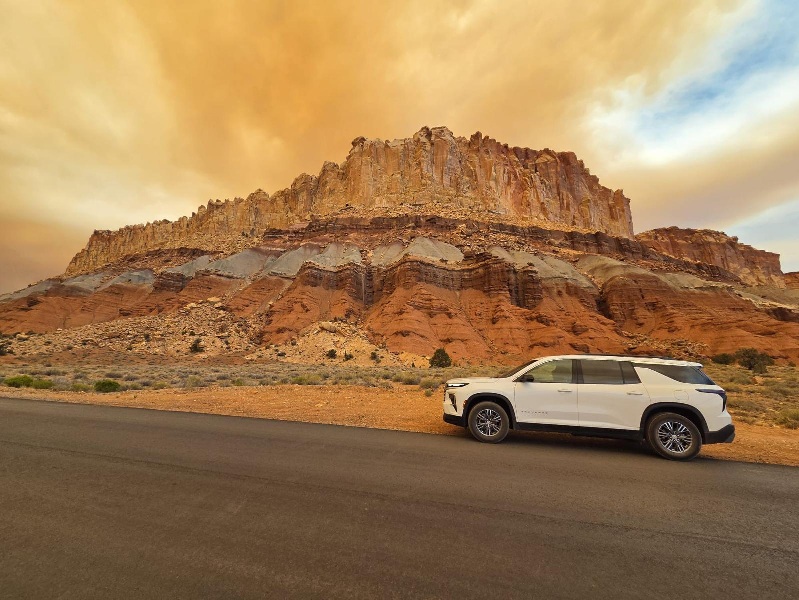
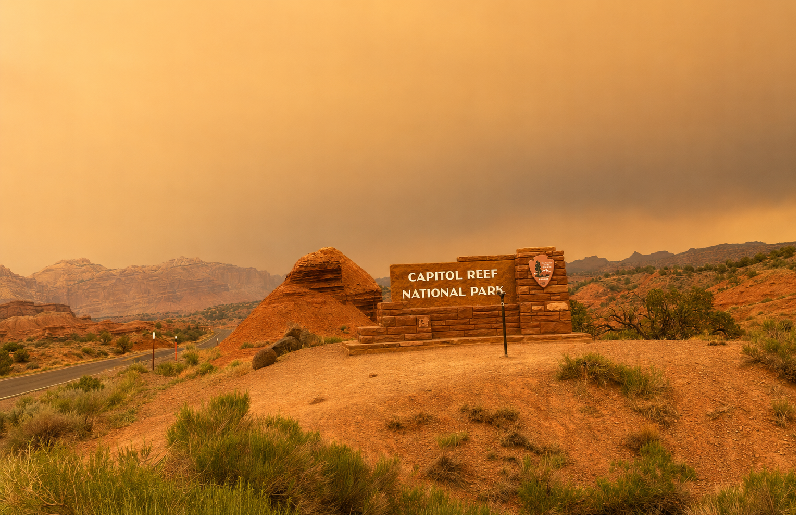
During my visit, several wildfires were burning in the region. At one point, thick smoke drifted into the park, dramatically reducing visibility, and we even found ashes covering our car. A few hours later, the conditions had already improved, showing just how quickly things can change depending on the wind.
Even if a wildfire is many miles away, smoke can still affect Capitol Reef. If you have asthma, respiratory issues, or simply want the best views, it’s worth checking the forecast before you go.
My Honest Review of Capitol Reef National Park
Before this trip, Capitol Reef was probably the Utah national park I knew the least about.
Now, it’s one of my favorites.
I loved its peaceful atmosphere, the incredible scenery, the historic Fruita orchards, and the fact that I could truly slow down and enjoy the park without dealing with large crowds.
Is Capitol Reef as famous as Zion or Bryce Canyon? No.
Does it deserve to be? Absolutely.
What makes Capitol Reef special isn’t just its stunning landscapes—it’s the entire experience. Walking among centuries-old orchards, spotting mule deer, tasting a slice of homemade pie at Gifford Homestead, exploring ancient petroglyphs, and hiking beneath towering red cliffs all come together to create a national park that’s unlike any other in Utah.
If you’re planning a Utah road trip, I strongly encourage you to spend at least one full day here instead of simply driving through. It ended up being one of the biggest surprises of my trip, and it’s a place I’d happily visit again.
Frequently Asked Questions About Capitol Reef National Park
Is one day enough to visit Capitol Reef National Park?
Yes. One full day is enough to see Capitol Reef’s main highlights, including the Fruita Historic District, the Fremont Petroglyphs, Gifford Homestead, the Scenic Drive, Capitol Gorge, and an easy hike like Hickman Bridge. If you want to explore more remote areas or tackle longer hikes, consider spending two days in the park.
Do you need a reservation to visit Capitol Reef National Park?
No. Unlike some U.S. national parks, Capitol Reef does not require a timed-entry reservation. You can enter the park anytime during opening hours by paying the entrance fee or using your America the Beautiful Pass.
What is the best thing to do in Capitol Reef National Park?
It’s hard to choose just one! My favorite experiences were exploring the Fruita Historic District, driving the Capitol Reef Scenic Drive, hiking to Hickman Bridge, and stopping at Gifford Homestead for a slice of homemade pie.
Are the famous pies at Gifford Homestead worth it?
Absolutely!
Trying one of the homemade pies at Gifford Homestead is one of Capitol Reef’s most iconic experiences. I tried the apple pie, peach pie, and cinnamon roll, and they were all delicious. Just be sure to arrive early, as the most popular flavors often sell out.
Is Capitol Reef National Park family-friendly?
Yes! Capitol Reef is an excellent national park for families. Many of its top attractions are easy to reach without long or difficult hikes, making it a great destination for visitors of all ages.
Can you visit Capitol Reef in an RV?
Yes. Most of the park’s main roads, including the Scenic Drive, are accessible to RVs, although size restrictions may apply on certain sections. However, some unpaved roads—such as Cathedral Valley and parts of the Burr Trail Road—are not recommended for large RVs or trailers.
What is the best time of year to visit Capitol Reef National Park?
Spring and fall are generally considered the best times to visit because of the mild temperatures and excellent hiking conditions. Summer is also popular, especially if you want to pick fruit in the historic orchards, but temperatures can be very hot. Winter offers fewer crowds and beautiful scenery, with occasional snow on the red rock cliffs.
Is Capitol Reef National Park worth visiting?
Without a doubt, yes. Capitol Reef may be one of Utah’s least-visited national parks, but it’s also one of its most rewarding. With stunning red rock landscapes, historic orchards, scenic drives, ancient petroglyphs, and far fewer crowds than Zion or Bryce Canyon, it’s a destination that deserves a spot on every Utah road trip itinerary. For me, it was one of the biggest surprises—and one of the highlights—of my trip through southern Utah.