Hurricanes in Florida
With the announcement of Hurricane Irma, which was expected to hit Florida within a few days, it was time to talk about hurricanes in Florida on the blog, because they are part of Florida life.
Florida is famous for its sunshine, hence its nickname, “The Sunshine State.” Fall and winter are generally mild and dry. However, Florida has a subtropical climate with a rainy season in spring and summer, bringing very hot and humid weather. It is also during this period that hurricane season begins. Officially, hurricane season starts on June 1 and ends on November 30, although August and September are the months during which the chances are highest that a hurricane will hit Florida’s coasts.
Floridians are “used to” living with the risk of hurricanes and know the essential things to do when a hurricane alert is issued, which I will talk about in the next article on this topic. Newer buildings in Florida are designed as much as possible to withstand hurricanes, and the government constantly repeats the basic safety rules residents should follow when a hurricane alert is issued.
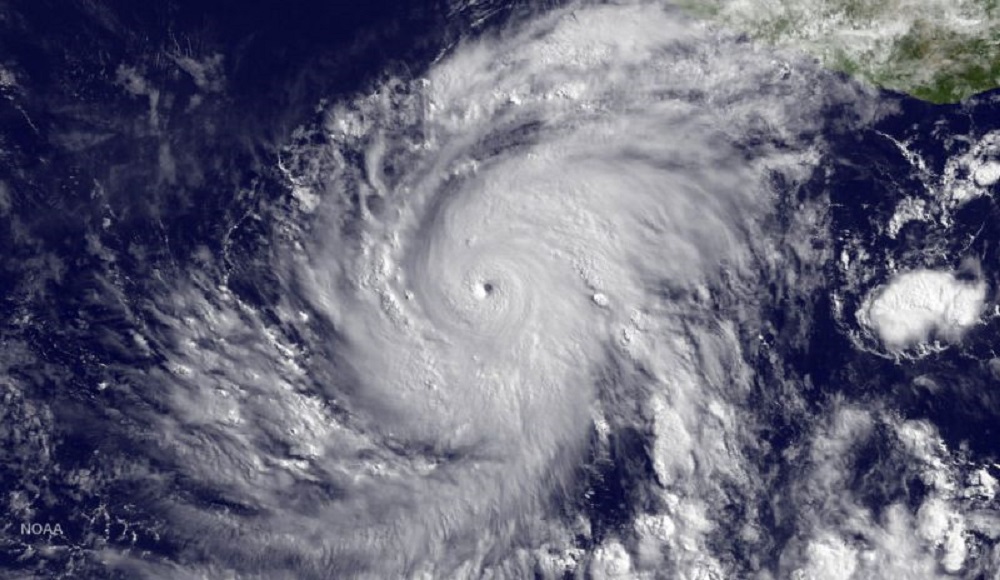
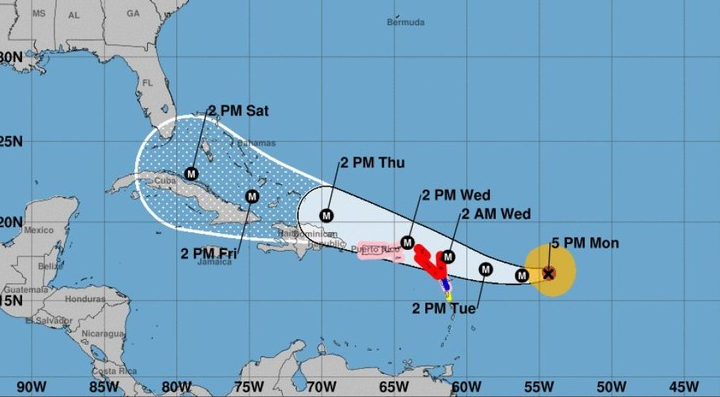
During periods of risk, the Hurricane Center provides hurricane forecasts, that is, potential tracks as well as the storm’s strength, classifying it into 5 categories. For this classification, the Saffir-Simpson scale is used, and here is the breakdown:
Tropical Depression: Winds from 0 to 63 km/h. Heavy rain.
Tropical Storm: Winds from 64 to 118 km/h. Heavy rain and negligible damage.
Category 1: Winds from 119 to 153 km/h. Storm surge: 1.2 to 1.5 meters.
Possible risk: Little or no significant building damage, with damage mainly limited to mobile homes, vegetation, and road signs. Power outages may occur temporarily or for several days. Coastal flooding risks and significant damage to docks and piers may also be associated with Category 1 hurricanes.
Category 2: Winds from 154 to 177 km/h. Storm surge: 1.8 to 2.4 meters.
Possible risk: Some damage to homes, especially roofs and windows, major damage to mobile homes, road signs torn out, and small trees uprooted. Power outages and a lack of drinking water may occur for several days. Flooding may affect roads, and piers may suffer significant damage. Coastal homes may need to be evacuated.
Category 3: Winds from 178 to 210 km/h. Storm surge: 2.7 to 3.7 meters.
Possible risk: Structural damage to small residences and unreinforced buildings, destruction of mobile homes, and uprooted large trees. Flooding may affect inland areas less than 1.5 meters above sea level up to 20 km inland. Widespread or almost total power outages and water shortages may occur. Landslides may also happen. Homes in flood-prone zones may need to be evacuated. Category 3 hurricanes and above are considered major hurricanes in the Atlantic and Pacific basins.
Category 4: Winds from 211 to 251 km/h. Storm surge: 4 to 5.5 meters.
Possible risk: Considerable damage to roofs and lightweight facades, and irreparable damage to small homes. Significant power and drinking water outages may occur. Flooding is possible in coastal zones less than 3 meters above sea level up to 9 km inland, and major beach erosion may occur. Emergency evacuation of single-story homes within 400 meters of the coast and one-story residences within 3.2 km of shorelines may be required.
Category 5: Winds above 251 km/h. Storm surge: More than 5.5 meters.
Possible risk: Destruction of roofs, doors, and windows, major structural damage to reinforced buildings, and destruction of some unreinforced homes. Long-term power outages and lack of drinking water may last for weeks or even months. First-floor flooding may affect all buildings near the coast, and many coastal infrastructures can be destroyed by storm surge. Residential zones and homes within 8 to 15 km of the coast may need to be evacuated urgently. Hurricanes of this intensity can be devastating and extremely dangerous.
Example of the forecast track for Hurricane Irma
Because of global climate issues very likely, hurricanes have intensified and become more violent over recent years, especially in 2005, which was a record year in terms of hurricanes. It has even been suggested that a Category 6 should be created to describe cyclones producing winds above 280 km/h.
To date, the most destructive hurricane known in Florida was Andrew, which struck on August 24, 1992. It remains one of the costliest natural disasters in the USA, with damages estimated at 26 billion dollars.
As for Irma, we are waiting for updated forecasts to know its path and strength. In the meantime, we will follow the safety instructions to apply in case of a hurricane alert, which I discuss in a dedicated article: What to do in case of a hurricane in Florida.