

Healthcare in the United States: Costs, How It Works, and Mistakes to Avoid
Moving to the United States is often a dream for many people, but there is one topic that many discover too late: the healthcare system.
Complex, expensive, and very different from what most Europeans are used to, it can quickly become a major source of stress and unexpected expenses. It is one of the most important things to understand before living in or even traveling to the United States.
In fact, if you are planning a trip to the U.S., it is highly recommended to compare health insurance plans before leaving, because even a simple medical consultation can be extremely expensive.
🛡️ Compare travel insurance plans and find the right coverage for your trip.
In this article, I’ll explain how the healthcare system works in the United States, using real-life examples from Florida, how much healthcare actually costs, and most importantly, the mistakes you should avoid.
How the Healthcare System Works
Before talking about costs — which can rise very quickly — it is essential to first understand how the healthcare system actually works.
1. Employer-Sponsored Health Insurance (the most common option)
This is how most Americans get health insurance. An employer offers a health insurance plan and covers part of the cost.
For example, some common insurance companies in Florida include:
- Florida Blue
- UnitedHealthcare
- Aetna
- Cigna
- Humana
In most cases, you pay part of the monthly premium, while your employer covers the rest. This is usually considered the most affordable option for many families in the United States.
Compare travel insurance plans for the United States here.
2. Individual Health Insurance (Marketplace / Obamacare)
If you do not have an employer-sponsored plan or if you are self-employed, you can purchase health insurance through the Marketplace, often referred to as Obamacare.
You choose your insurance plan based on your budget, coverage needs, and age. One important thing to keep in mind: the cheaper the plan, the less coverage it usually provides.
In Florida, prices can vary greatly depending on the plan and your situation. A single person may pay anywhere from around $150 to $800+ per month, while family plans can cost significantly more. Common providers in Florida include companies such as Florida Blue and Ambetter.
A Very Important Thing to Understand
The amount you pay depends on your estimated income for the upcoming year. This is where things can become a little complicated.
When applying for Marketplace insurance, you must estimate how much money you expect to earn during the following year. Based on that estimate, you may qualify for financial assistance (called a subsidy) that helps reduce the cost of your monthly insurance premium.
The following year, the Internal Revenue Service (IRS) compares your estimated income with your actual income and adjusts the subsidies accordingly, since they were originally based on an estimate.
What Does This Mean in Practice?
- If you earned more than expected → you may have to repay part of the financial assistance you received.
- If you earned less than expected → you may receive additional money back.
For self-employed workers, this can become especially complicated because income is often unpredictable and can vary from month to month. As a result, it can be difficult to accurately estimate your yearly income, which increases the risk of mistakes.
This means you could end up with an unpleasant surprise when filing your taxes.
The Marketplace can be a great option, but it is very important to understand how it works to avoid costly mistakes.
Important: Even With Insurance, You Still Pay
This is one of the biggest differences compared to France. In the United States, having health insurance does not mean healthcare is free.
In most cases, you still have to pay:
- a monthly premium
- a deductible — sometimes several thousand dollars before the insurance starts covering expenses
- a copay (for example, $20 to $50 per doctor visit)
Important Terms to Understand
- Deductible → the amount you must pay before your insurance begins covering medical expenses
- Copay → a fixed amount you pay for each doctor visit or medical service
- Out-of-pocket maximum → the maximum amount you will have to pay during the year before the insurance covers 100% of eligible expenses
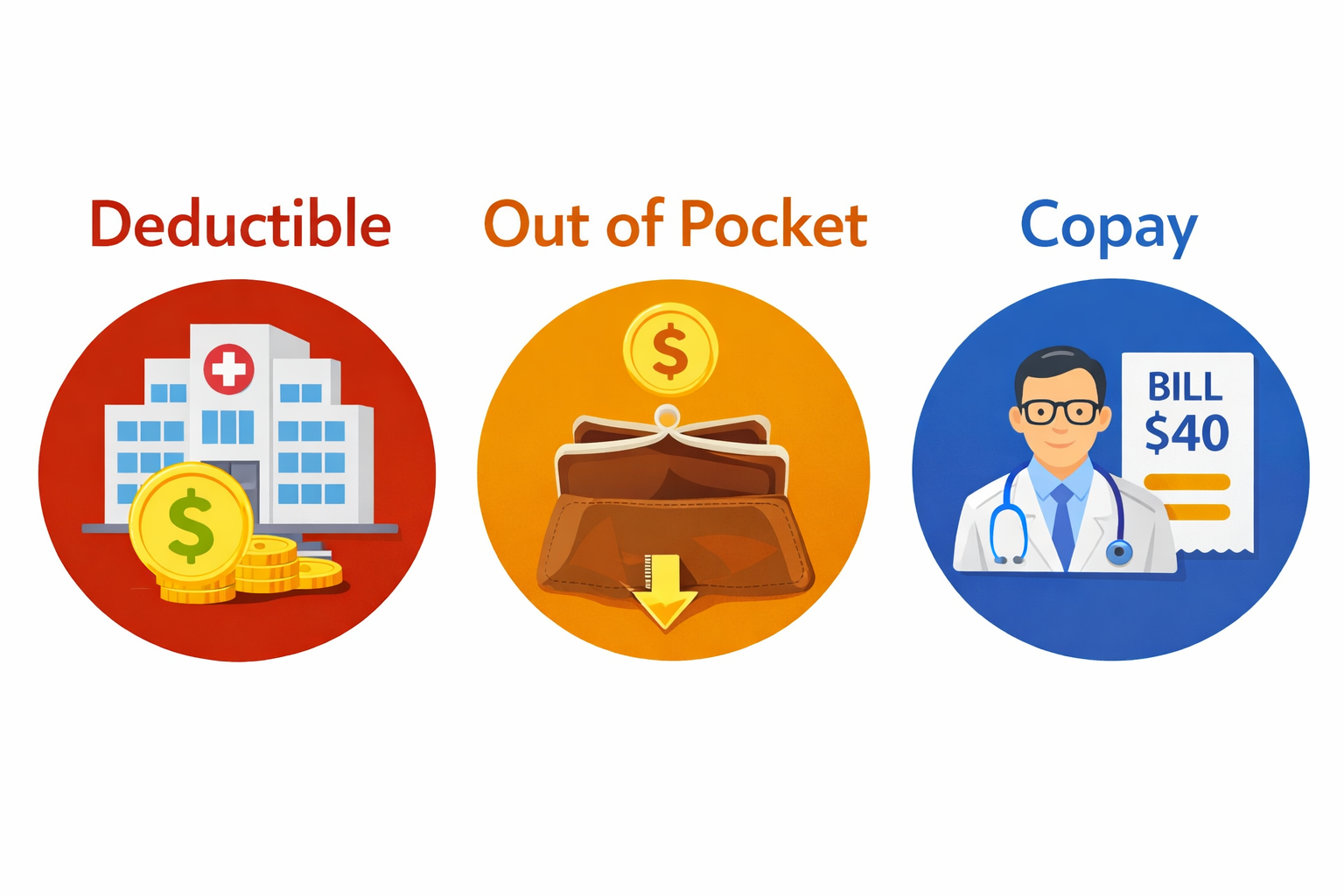
Understanding the Basics of the U.S. Healthcare System: Deductible, Copay, and Out-of-Pocket Maximum
These are three essential terms you need to understand to better anticipate your medical expenses in the United States.
HMO vs PPO: What’s the Difference?
In Florida, you will often have to choose between two main types of health insurance plans:
HMO (Health Maintenance Organization)
Usually less expensive, but more restrictive.
With an HMO plan, you must choose a primary care doctor (PCP), and you generally need a referral from that doctor before seeing a specialist.
PPO (Preferred Provider Organization)
Typically more expensive, but much more flexible.
With a PPO plan, you can usually see the specialist of your choice without needing a referral, as long as the provider is within your insurance network.
In-Network vs Out-of-Network
One very important thing to understand is that not all doctors and medical providers are covered the same way by your insurance.
- In-network: lower costs and better coverage
- Out-of-network: very limited reimbursement or sometimes no coverage at all
This is why it is extremely important to verify that a doctor, specialist, hospital, or surgeon is part of your insurance network before scheduling an appointment or undergoing a medical procedure.
Be Aware That In-Network Provider Networks Can Change
One important thing to understand is that insurance networks are not fixed. Even if you regularly see the same doctor, that provider may eventually leave your network, change agreements with your insurance company, or stop accepting your specific plan.
As a result, a medical visit that was previously covered may suddenly no longer be covered at all. In that case, you may either have to pay significantly more out of pocket or find a new doctor.
This is why it is very important to regularly verify that your doctor or specialist is still considered in-network, especially before an appointment.
Even with health insurance, you often need to remain extremely vigilant. It is essential to carefully check what is covered, review reimbursements, monitor medical bills, contact your insurance company in case of errors or denied claims, and sometimes even negotiate certain costs directly with the provider, whether it is a doctor, hospital, or laboratory.
The U.S. healthcare system can be complex and often requires patients to closely follow and manage their own cases.
In summary, having health insurance helps reduce financial risks, but it does not eliminate medical expenses or the sometimes lengthy administrative processes that come with them.
To give you a real-life example, here is a situation we personally experienced in Florida that perfectly illustrates how the American healthcare system works — and the surprises that can come with it.
One day, we had to use an ambulance service. It was not our decision; the hospital determined that an ambulance transfer was necessary as part of an emergency situation.
A few weeks later, we received the bill: $1,200 for a very short ride.
The issue was that the ambulance company was considered out-of-network.
As a result, the insurance only covered part of the bill — around $300 — leaving us responsible for the remaining $900.
I appealed the decision with the insurance company because it happened during an emergency situation, but the appeal was denied.
At the same time, I contacted the ambulance company directly to negotiate the bill. In the end, we were able to obtain a reduction and paid $400 instead of the original $900 balance.
This experience clearly shows that even in emergencies, some medical costs may only be partially covered.
It also highlights several important realities of the U.S. healthcare system:
- Being out-of-network can completely change the cost
- It is sometimes possible to negotiate medical bills
- patients often need to be proactive and not hesitate to dispute charges or ask questions

The “No Surprises Act” Protects Patients From Certain Unexpected Medical Bills
Since 2022, a federal law called the No Surprises Act has helped protect patients from certain unexpected medical bills, often referred to as “surprise billing.”
For example, if you receive care at an in-network hospital but one of the providers involved in your treatment — such as an anesthesiologist — is out-of-network, the law limits how much you can be charged.
The same protections generally apply to emergency medical care received at an out-of-network facility.
However, there is an important exception: ground ambulances are often not covered under this law, which was unfortunately the case in our situation. Still, it can always be helpful to mention the No Surprises Act when negotiating with your insurance company or disputing a medical bill.
3. Private Health Insurance (Outside Obamacare)
In addition to Marketplace plans (Obamacare), there are also private health insurance plans in the United States that are purchased directly from insurance companies without going through the official Marketplace system.
These are often referred to as “private plans” or off-Marketplace insurance plans.
Unlike Obamacare plans, these private insurance policies generally do not qualify for government financial assistance (subsidies). The price you pay depends entirely on the plan you choose, your age, your health condition, and the level of coverage provided.
These plans may still be offered by the same insurance companies found on the Marketplace, such as Florida Blue, Aetna, Cigna, and others, but under different rules and contracts.
When Are Private Insurance Plans Used?
Private health insurance plans are often chosen by:
- people whose income is too high to qualify for Obamacare subsidies
- expatriates or new arrivals who do not meet Marketplace eligibility requirements
- self-employed workers looking for a more flexible solution
- or simply people seeking a specific type of coverage better suited to their needs
Warning: Coverage Can Sometimes Be Limited
Some private insurance plans, especially the cheaper ones, may offer more limited coverage, including:
- exclusions for certain medical conditions
- reimbursement caps
- more limited doctor networks
- or the absence of certain essential benefits
This is why it is extremely important to carefully read the terms and conditions before signing up for a plan.
Prices Can Vary Significantly
Insurance prices can vary greatly depending on the level of coverage:
- basic plans → cheaper but with limited coverage
- comprehensive plans → more expensive but offering better protection
In some situations, these private insurance plans can actually cost more than Obamacare plans, especially if you would have qualified for financial assistance through the Marketplace.
Private insurance can be a good solution in certain cases, but it also requires even more caution. Unlike the Marketplace, you are entirely responsible for choosing the right plan, and a poor decision can lead to significant medical expenses if something happens.
4. Without Health Insurance
This is where many people are surprised: without health insurance, you are responsible for paying 100% of your medical expenses. There is no reimbursement and no financial protection.
As you can imagine, even a simple medical emergency can quickly become a serious financial problem.
In some situations, especially in the emergency room, a bill can easily exceed $2,000 — or much more if additional tests or treatments are required.
Can You Sometimes Pay Less Without Insurance?
In some cases, yes. Surprisingly, uninsured patients can sometimes pay less than insured patients because some doctors or clinics offer “self-pay” rates. Since there is less paperwork and payment is made directly, the costs can occasionally be lower.
As strange as it may sound, this happens fairly often in the United States.
It is also sometimes possible to negotiate medical bills or set up a payment plan.
However, it is important to emphasize that being uninsured still represents a major financial risk. These discounts are never guaranteed, they remain limited, and in the event of a serious medical issue — such as hospitalization, surgery, or an emergency — costs can quickly become extremely high.
In short, even if you may occasionally pay less for basic care without insurance, an unexpected situation can still lead to medical bills totaling several thousand dollars.
How Much Does a Medical Appointment Cost?
Here are some realistic prices in Florida without health insurance. However, keep in mind that costs can increase very quickly if lab work, imaging (X-rays, CT scans, etc.), or additional treatments are needed:
- Primary care doctor: $120 to $300
- Specialist: $200 to $500+
- Emergency Room (ER): $1,500 to $5,000+ (and sometimes much more depending on the tests performed)
- Ambulance: $800 to $2,500+
Even with health insurance, you still pay part of the cost. The amount depends on your insurance plan, your copay, and your deductible. For example, a specialist visit may still cost anywhere from $50 to $150+, depending on your coverage.
One very important thing to understand is that there is no standard pricing system in the United States. Medical costs vary enormously from one facility to another, and the same procedure can cost dramatically different amounts depending on where you go. In addition, the “listed prices” are often much higher than the final negotiated amount.
Given these high costs, having the right health insurance is essential to avoid extremely expensive medical bills.
What Is Healthcare Like daily?
In everyday situations, for routine medical appointments, you usually pay a copay (a fixed amount). For example, a visit to a primary care doctor may cost around $40.
You pay this copay at each appointment, and the insurance company covers the remaining balance.
It is also important to mention that some healthcare services are well covered by insurance plans.
For example, many insurance plans cover:
- a complete annual check-up (preventive care), often fully covered
- certain screening tests
- preventive consultations
These services may sometimes be covered at 100%, with no additional cost for the patient.
Why Are Emergency Rooms So Expensive?
Many people make the mistake of going to the Emergency Room for issues that could be treated elsewhere.
In the United States, Emergency Rooms (ERs) are intended for serious medical situations, and most importantly, every single service is billed separately.
For example:
- ER admission → billed separately
- doctor evaluation → billed separately
- blood tests → billed separately
- imaging (X-rays, CT scans, etc.) → billed separately
As a result, a medical bill can very quickly reach several thousand dollars.
Our Real-Life Experience in the Emergency Room
To better illustrate how the healthcare system works in the United States, here is a real situation we experienced ourselves.
A few years ago, our daughter had her first stomach virus. She was extremely sick for three days and became severely dehydrated. A friend advised us to take her to an urgent care center. We went to the first one we found without checking whether it was in-network.
When we arrived, the front desk checked our insurance and informed us that the facility was out-of-network. We were given three options: stay and pay out-of-network rates, go to an urgent care center within our network, or go directly to the hospital emergency room located right next door.
Given our daughter’s condition, we decided to go to the Emergency Room.
Emergency Room Treatment
Once there, everything moved very quickly. She was immediately taken care of and received IV fluids for rehydration, anti-nausea medication, and medication to continue at home afterward.
We spent about two hours in the Emergency Room, in a private room, with several healthcare professionals involved in her care. The treatment was fast, efficient, and reassuring.
The Bill
A few weeks later, we received the bill: approximately $2,500.
Our insurance only covered a small portion of it because, at the time, we did not yet have very good coverage. We also did not fully understand how the system worked and did not try to negotiate the bill.
This experience taught us a lot.
Today, we always make sure to verify whether a medical center or doctor is in-network before going. For non-serious health issues, we now prefer urgent care centers or regular doctors and reserve the Emergency Room for truly serious situations.
In many cases, urgent care centers are well-equipped, significantly less expensive, and perfectly suited for this type of medical issue.
Alternatives to the Emergency Room (Very Important)
For “non-serious” medical issues, there are many better and far less expensive options available.
Urgent Care
Urgent care centers are walk-in medical clinics designed for minor health problems such as infections, mild injuries, and other non-life-threatening conditions.
Without insurance, a basic visit generally costs around $100 to $250, and often less with insurance coverage.
In most cases, urgent care is significantly cheaper than going to the Emergency Room.
🧳 Don’t travel without coverage. Compare plans before you go.
Pharmacies and Walk-In Clinics (CVS, Walgreens, etc.)
Some pharmacies offer simple medical consultations through services such as MinuteClinic or walk-in clinics.
These clinics can handle minor symptoms, prescription refills, rapid testing, and basic healthcare needs.
The cost is usually around $80 to $150.
These services are fast, convenient, and often perfectly sufficient for minor medical issues.
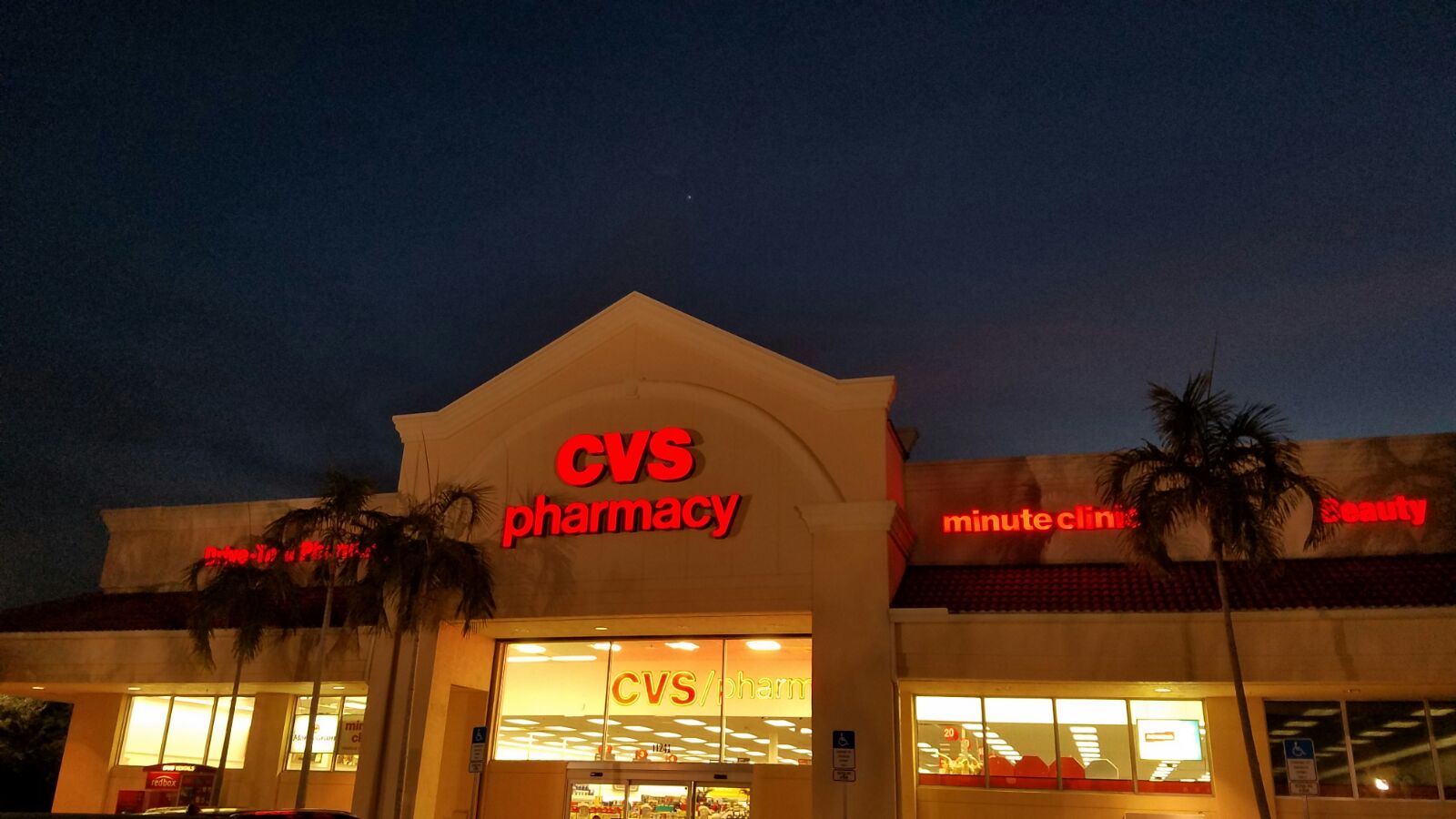
Where Should You Go in Florida for a Non-Urgent Medical Problem?
- CVS MinuteClinic → ideal for minor healthcare needs, fast, and no appointment required
- Walgreens Healthcare Clinic → simple consultations and rapid testing
- Urgent Care centers (local clinics) → often open late and are available without an appointment
To quickly find a clinic near you, simply search for nearby urgent care centers on Google Maps.
💙 Find affordable travel insurance in just a few minutes.
Medications in the United States
The cost of medications can vary significantly depending on your situation. Without insurance, prices can be very high, especially for certain treatments.
With insurance, part of the cost is usually covered, but you will often still pay a copay. The same medication may cost only a few dollars with insurance, but several dozen or even hundreds of dollars without insurance coverage.
Prices can also vary from one pharmacy to another.
How Prescriptions Work (RX)
In the United States, most medications are only available with a prescription, commonly called an “RX.”
After your medical appointment, the doctor will usually send the prescription electronically directly to the pharmacy of your choice.
You can then pick up your medication inside the pharmacy or use the drive-thru service — which is extremely common in the United States — without even leaving your car.
It is fast, convenient, and very different from how the system works in France.
Tips for Paying Less for Medications
Some pharmacies offer discount programs:
- Walmart → discounted generic medication lists
- CVS Pharmacy and Walgreens → savings programs and discount cards
There are also apps such as GoodRx that allow you to compare prices and access discounts.
In some cases, the price through GoodRx can actually be lower than your insurance copay. I personally use it to compare prices before purchasing medications.
Over-the-Counter Medications (OTC)
In the United States, many medications are available without a prescription. These are called over-the-counter medications, often shortened to “OTC.”
You can buy them at pharmacies such as CVS Pharmacy or Walgreens, but also directly in supermarkets like Walmart or Target.
The medication sections are often very impressive, with a huge variety of products available.
One important thing to know is that American pharmacies like CVS or Walgreens are almost like mini supermarkets, with large sections dedicated to medications, healthcare products, beauty products, and even food items.
Examples of Over-the-Counter Medications
- pain relievers (ibuprofen, acetaminophen/Tylenol)
- cold and cough medications
- allergy medications
- digestive remedies
- creams and basic treatments

Prices
The good news is that these over-the-counter medications are generally affordable and often much cheaper than a medical consultation.
Of course, even though they are available without a prescription, it is still important to carefully read the instructions and warnings. For more serious or persistent symptoms, a medical consultation is still necessary.
What About Dental, Vision, and Orthodontics?
This is a very important point that is often misunderstood.
In the United States, dental and vision coverage are generally NOT included in standard health insurance plans. In many cases, you need to purchase separate insurance plans.
Vision Insurance
Contrary to what many people expect, vision care is usually not included in standard health insurance in the United States.
Even when you receive health insurance through your employer, vision coverage is often either not included or only available as an optional add-on plan.
Separate Vision Insurance (Very Common)
In most situations, you need to purchase a specific vision insurance plan, commonly called a “vision plan.” Companies such as VSP Vision Care are extremely common in the United States.
The Good News
These plans are much less expensive than traditional health insurance.
In general:
- around $10 to $20 per month
- or approximately $120 to $200 per year
Our Experience
In our case, our health insurance includes vision coverage for our children.
Specifically, they are entitled to one eye exam and one pair of glasses per year.
However, for us as adults, vision coverage is not included in our regular health insurance plan.
We therefore purchased a separate vision insurance plan through VSP Vision Care, which costs around $130 per year per person and includes coverage for glasses or contact lenses.
How Does It Work in Practice?
In the United States, for vision care, you do not necessarily see an ophthalmologist first.
In most cases, you will visit an optometrist.
An optometrist:
- performs eye exams
- prescribes glasses or contact lenses
- is usually faster to access and less expensive
An ophthalmologist (a medical doctor specializing in eye diseases) is generally reserved for:
- medical eye problems
- eye diseases and more serious conditions
Where Can You Buy Glasses?
Glasses are easy to find in the United States. You can purchase them from optical stores, large retail chains, or even places like Costco.
And surprisingly, prices can sometimes be affordable and even comparable to — or occasionally lower than — prices in France, depending on the options chosen.
Typical Prices
- Eye exam: $100 to $250+
- Glasses: $200 to $500+
With vision insurance, the eye exam is usually covered (or you only pay an additional fee if extra testing is recommended), and you generally receive coverage for one pair of glasses and/or contact lenses, depending on your plan.
For vision care in the United States, it is therefore very common to need separate insurance coverage. Fortunately, these plans are usually affordable, the system is relatively simple, and glasses remain reasonably priced compared to many people’s expectations.

Dental Care
Just like vision insurance, dental care in the United States often requires a separate insurance plan.
However, not all dentists accept every insurance plan, coverage can be limited, and some procedures can be very expensive. Even with dental insurance, there is frequently a significant amount left to pay out of pocket.
Prices (With or Without Insurance)
Costs can vary depending on the dental office, the city, and the insurance plan.
Here are some general price ranges without insurance:
- Cleaning (dental cleaning/scaling): $100 to $300
- Cavity filling: $150 to $400
- Crown: $1,000+
With dental insurance:
- preventive cleanings may be fully covered or very well reimbursed
- Routine dental care (such as fillings) is often partially covered
- major procedures usually remain largely your responsibility financially
Another important point is that dental cleanings are generally recommended every 6 months, including for children, which is extremely common in the United States.
The American dental system focuses heavily on prevention, with regular check-ups, frequent cleanings, and personalized follow-up care.
However, costs can rise very quickly when major dental work is needed.
This is why it can sometimes be worth comparing prices between dental offices and even negotiating certain treatments.
Orthodontics
Orthodontic treatment is generally not well covered by insurance, even when you do have dental coverage.
The cost of orthodontic treatment is typically between $4,000 and $10,000+.
Once again, it is often possible to negotiate prices and set up monthly payment plans.
FAQ
Is healthcare free in the United States?
No. The healthcare system in the United States is not free. Without insurance, you are responsible for paying 100% of your medical expenses.
Can you go to the doctor without insurance?
Yes, but you will have to pay the full cost of care yourself, which can quickly become very expensive.
How much does health insurance cost in Florida?
On average, health insurance costs between $300 and $800+ per month for one person, and significantly more for a family.
Do you need health insurance when traveling to the United States?
Yes, it is highly recommended. Even a simple medical emergency can cost several thousand dollars.
What are the biggest mistakes to avoid?
Here are some of the most common mistakes people make:
- going to the Emergency Room for a non-serious issue
- not having health insurance
- not checking whether a doctor is in-network
- underestimating the real cost of healthcare
Understanding how the system works can help you avoid major unexpected expenses.
Conclusion: Should You Be Afraid of the U.S. Healthcare System?
The answer is not that simple.
For example, here in Florida, I personally find the healthcare system efficient and fast. However, the U.S. healthcare system is also complex, unequal, and extremely expensive — including for Americans themselves.
Even with health insurance, there are often significant out-of-pocket costs, administrative procedures, coverage verifications, and sometimes denied claims.
And unlike in France, your healthcare coverage often depends on your personal situation, such as your job, your insurance plan, or your income level. Losing your job can also mean losing your health insurance, which shows how fragile the system can sometimes be.
As you probably understand by now, having insurance helps protect you financially, but it does not guarantee simple or fully covered healthcare.
The real challenge is therefore not only the cost itself, but also the complexity of the system and the fact that you need to understand how it works in order to avoid unpleasant surprises.
In the United States, you can absolutely receive excellent medical care, but for many people, the healthcare system remains one of the most difficult aspects of daily life to navigate.
If you are planning a trip or moving to the United States, it is very important to anticipate these healthcare costs and choose appropriate insurance coverage beforehand.
Compare travel insurance plans for the United States here.